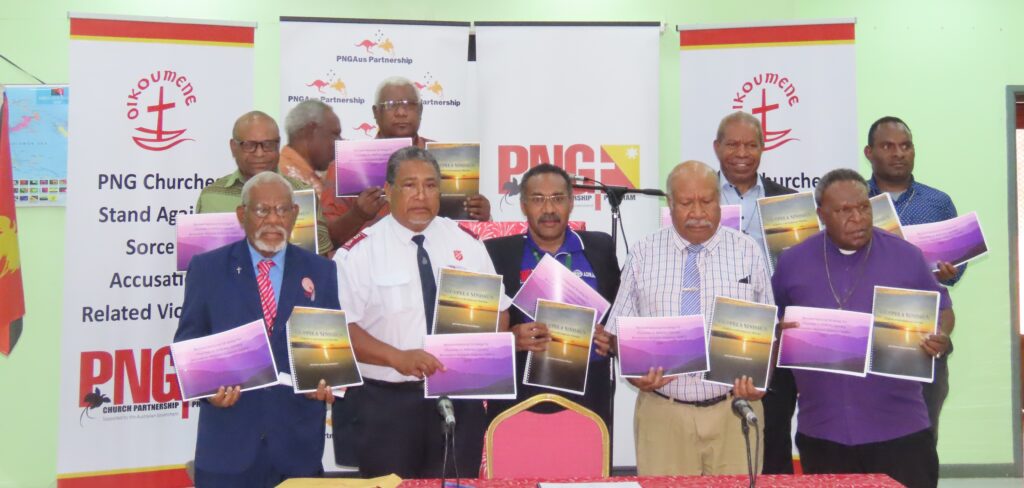
Goroka, Eastern Highlands Province · 22 October 2026
ELCPNG Head Bishop Rev. Dr Jack Urame has called for practical action to protect lives and strengthen families and communities, at the launch of two church resources addressing sorcery accusation related violence (SARV) and community well-being.
The Churches National SARV Strategy and the Whole of Life Indigenous Theology publication were launched at the Melanesian Institute in Goroka on Thursday, 22 October 2026. The event brought together Christian leaders, government representatives, development partners and community members.
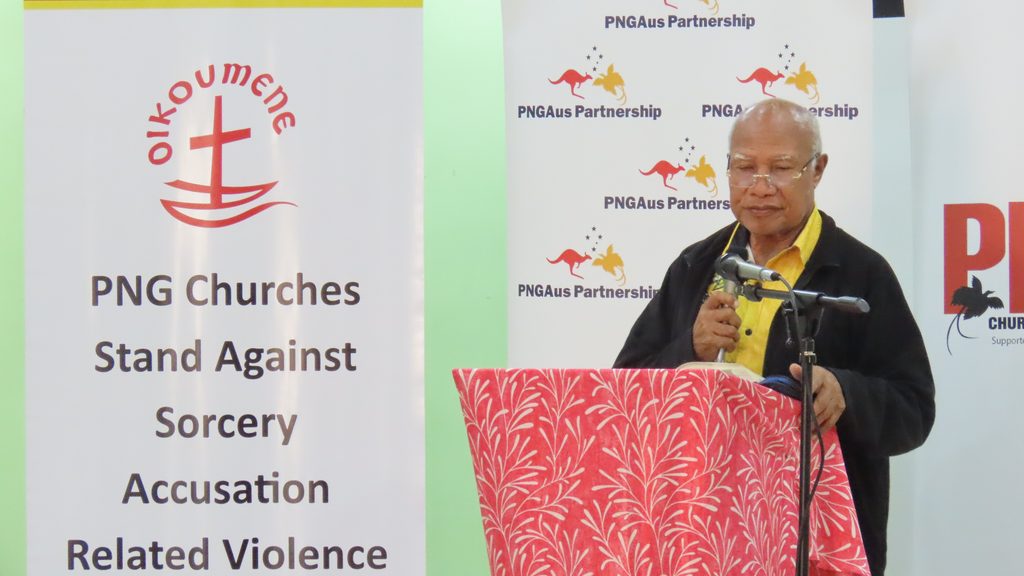
Bishop Urame, who co-authored the theology publication with Rev. Dr Maki Koroma of the United Church, delivered the closing remarks. Papua New Guinea Council of Churches General Secretary Rev. Roger Joseph delivered the main launch address.
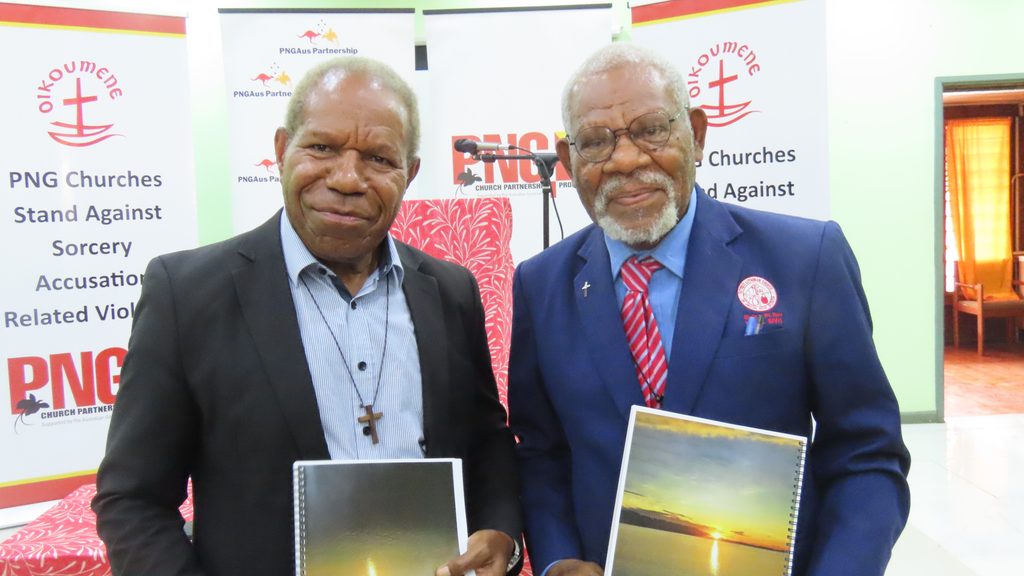
A collective stand
In an interview, Bishop Urame described SARV as a major issue. He explained that ELCPNG and other mainline churches had taken a collective stand, and had asked how they could help address and reduce it.
He said the church was concerned about people’s livelihoods and well-being and wanted people to live good lives. The two documents would give churches tools to address pressing issues at family, congregation and community levels.
The scale of the problem is clear. In a national survey of 2,000 people by the Melanesian Institute, released in August 2026, 90% said sorcery accusation related violence happens in their own community, according to a report by LiCAS.news.
Theology bilong gutpela sindaun
Explaining the Whole of Life Indigenous Theology publication, which he referred to as Theology bilong gutpela sindaun, Bishop Urame said positive values within PNG cultures, together with biblical teaching, could guide people to live well with one another.
He said these values could help build strong families and communities living in peace and harmony. The publication responds to present concerns in villages and communities where, in his assessment, respect, good values and moral standards were no longer strong.
In his closing remarks, Bishop Urame described the SARV strategy as expressing the collective position and firm will of PNG’s churches to eradicate sorcery-related violence. He said the theology publication offered a practical roadmap to rebuild communities where false accusations had shattered peace and family well-being.
“We cannot change the whole world, but we can take little actions wherever we are to make a difference in the lives of individuals, families, and communities.”
Bishop Dr Jack Urame
He also pointed to the publication’s cover as an expression of hope.
“We close with much hope. As you can see on the cover of the Theology publication a beautiful sunshine expressing the hope before us, because God is with us.”
Bishop Dr Jack Urame
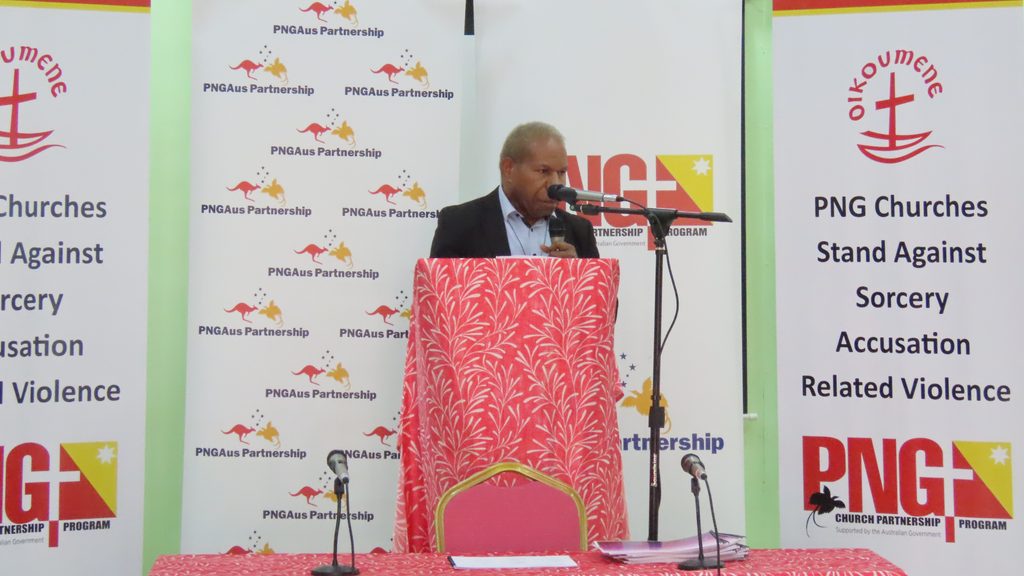
The national SARV strategy
The national SARV strategy was developed by the PNG Council of Churches with support from the PNG-Australia Partnership, through consultations involving churches, church leaders, practitioners and organisations working on SARV.
It establishes a common framework for preventing violence, supporting survivors and helping communities move away from fear and accusation. Its central message is that no person should be harmed, tortured, displaced or killed because they have been accused of sorcery.
Speaking at the launch, Rev. Joseph emphasised the churches’ shared responsibility to respond.
“Today, churches across Papua New Guinea are standing together to say that Sorcery Accusation Related Violence must stop,” said Rev. Joseph. “Violence is always unacceptable. It goes against the values of love, compassion and respect that are shared by all people of faith.”
Rev. Joseph called on congregations nationwide to move beyond the official ceremony and focus on parish-level implementation.
Under the strategy, churches will:
- develop a shared Christian response across denominations
- train pastors, priests, church leaders, youth leaders and women’s fellowship leaders
- promote peace, human dignity and non-violence through sermons, Bible studies and awareness activities
- carry consistent messages through church schools, health services, radio stations and community programmes
- help calm tensions when accusations arise, and connect affected people with services
- work alongside police, village courts, health workers, safehouses and human rights defenders
- support survivors through counselling, recovery and reintegration into their communities
The strategy recognises the churches’ extensive reach through congregations, education, health and community networks, while acknowledging that churches alone cannot eliminate SARV.
A call to Government
Rev. Joseph called on the Government to deliver on its commitments and work with churches to implement the long-delayed SARV National Action Plan. Church leaders are also calling on the Government to publish the SARV National Action Plan, fund it adequately, strengthen coordination, invest in prevention, survivor support and community awareness, and ensure police and justice agencies have the resources they need.
The Council also welcomed the Prime Minister’s commitments to Parliament that week. On 19 October 2026, Prime Minister James Marape told Parliament he supported funding the plan, setting up a coordinated secretariat and involving frontline organisations, including churches. The church strategy aligns with the Government’s National Action Plan, while recognising the churches’ role in shaping attitudes, values and community behaviour.
Signing and acknowledgments
Representatives of the Lutheran, Catholic, Anglican, Baptist Union, Salvation Army and Body of Christ churches officially signed the document at the launch.
In his closing acknowledgments, Bishop Urame thanked the Eastern Highlands Provincial Government, the Australian Government and High Commission, the Melanesian Institute, University of Goroka cultural performance groups, media personnel and participating church leaders.
Sources: PNG Council of Churches media release, 22 October 2026; Melanesian Institute survey (as reported by LiCAS.news, 12 August 2026); Office of the Prime Minister; Kristen Redio interview with Bishop Urame. Photos: Kristen Redio.

As a Advocator of SARV framework, I fully understand and tried my very best in my little way to uproot the false believe in my Society.
I also understand that PNG will change its Mindset in some generation to come.
I must act today for tomorrow
THE FUTURE IS NOW